
Barbara Bubbi
I pianeti giganti contengono idrogeno oscuro?
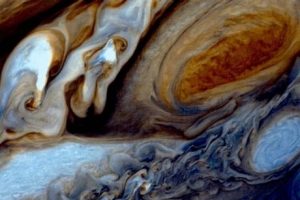
Alcune ricerche condotte in laboratorio hanno rivelato che negli strati profondi di pianeti come Giove e Saturno, dove si raggiungono elevatissimi livelli di temperatura e di pressione, si troverebbe inaspettatamente uno strato di idrogeno semimetallico opaco alla luce. La scoperta contribuisce a spiegare come possono raffreddarsi ed evolvere i pianeti giganti. Continua a leggere
Una stella brillante in un ambiente dai colori vivaci
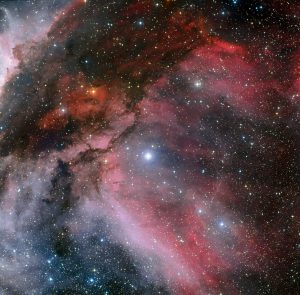
Una spettacolare immagine ripresa dalla Wide Field Imager dell’ESO a La Silla, in Cile mostra la stella brillante e insolita WR 22, ed i suoi colorati dintorni. WR 22 è una stella molto calda e brillante, che sta spargendo strati della sua atmosfera nello spazio, ad una velocità molti milioni di volte più elevata rispetto al Sole. Si trova nella parte esterna della Nebulosa della Carena, da cui si è formata. Continua a leggere
Nursery stellare in NGC 1672

Questa immagine mozzafiato della galassia a spirale barrata NGC 1672 consente di ammirare la grande barra della galassia, le vaste regioni di formazione stellare e le fasce oscure di polvere interstellare. Continua a leggere
Una nebulosa ricca di azoto

Questa immagine di Hubble mostra una nebulosa planetaria chiamata NGC 6153, situata a circa 4000 anni luce di distanza nella costellazione dello Scorpione. La debole foschia blu presente in tutta l’inquadratura mostra ciò che resta di una stella simile al Sole dopo che ha esaurito la maggior parte del suo combustibile. Continua a leggere
Una galassia starburst molto speciale

Questa immagine è stata ripresa dall’Advanced Camera for Surveys (ACS) a bordo del telescopio Hubble e mostra una galassia starburst dal nome MCG + 07-33-027.
La galassia si trova a circa 300 milioni di anni luce di distanza dalla Terra e presenta un tasso straordinariamente elevato di formazione stellare. Continua a leggere
Una ‘carezza’ al Sole
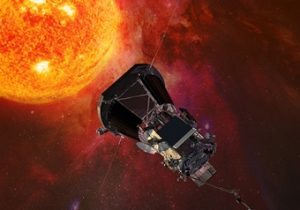
Proseguono i test per la navicella Solar Probe Plus della NASA, che nell’estate del 2018 verrà lanciata verso la nostra stella per raccogliere dati sull’attività solare. La sonda batterà tutti i record di vicinanza al Sole.
Avvicinarsi al Sole fin quasi a sfiorarlo: ecco la nuova sfida della NASA, che con la sua missione Solar Probe Plus tenterà un’impresa immaginata circa tre millenni fa già dalla mitologia greca. Continua a leggere
La regione di formazione stellare S106

L’immagine del telescopio Hubble mostra Sh 2-106, o S106 in breve. Si tratta di una compatta regione nebulare di formazione stellare nella costellazione del Cigno a quasi 2000 anni luce da noi.
Una giovane stella denominata S106 IR è avvolta nella polvere al centro dell’immagine, ed è responsabile della struttura simile a clessidra della nube gassosa circostante e della turbolenza visibile all’interno. Continua a leggere
Un mix inedito per NGC 6778
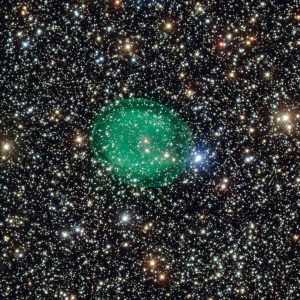
This intriguing picture from ESO’s Very Large Telescope shows the glowing green planetary nebula IC 1295 surrounding a dim and dying star. It is located about 3300 light-years away in the constellation of Scutum (The Shield). This is the most detailed picture of this object ever taken.
Osservando la nebulosa planetaria NGC 6778 con il telescopio da 10 metri GTC alle Canarie, un gruppo di ricercatori spagnoli ha contribuito a svelare un vecchio enigma: come mai le abbondanze chimiche nel gas delle nebulose planetarie risultano diverse a seconda del tipo di linee spettrali preso in considerazione. Continua a leggere
I colori e l’evoluzione delle galassie
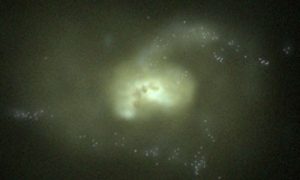
Un team internazionale di scienziati, guidati dall’Institute for Computational Cosmology (ICC) dell’Università di Durham ha utilizzato una nuova simulazione al computer dell’Universo per indagare i colori delle galassie e quello che quei colori potrebbero dirci sulla loro evoluzione. Continua a leggere
Una complessa regione di formazione stellare
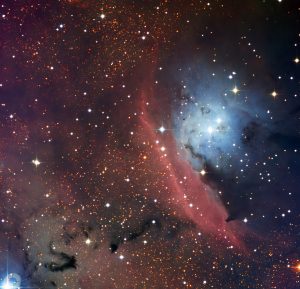
Il telescopio Danish situato all’Osservatorio dell’ESO a La Silla, in Cile, ha ripreso una suggestiva immagine di NGC 6559, un oggetto che evidenzia l’anarchia che regna quando si formano stelle all’interno di una nube interstellare. Continua a leggere