La Galassia Girasole brilla in luce infrarossa
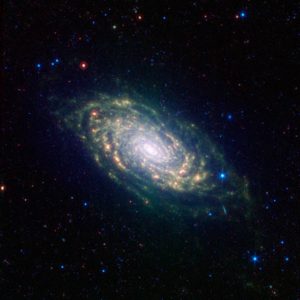
I vari segmenti dei bracci di spirale della Galassia Girasole (Sunflower Galaxy), nota anche come Messier 63, risplendono chiaramente in questa immagine ripresa in luce infrarossa dal telescopio spaziale Spitzer della NASA. La luce infrarossa è sensibile alle strisce di polvere, che appaiono oscure nelle riprese in luce visibile. L’immagine rivela strutture complesse che percorrono la spirale della galassia. Messier 63 si trova a circa 37 milioni di anni luce di distanza, non lontano dalla ben nota Galassia Vortice (Whirlpool Galaxy). Continua a leggere
Rose nei cieli australi

Le due più note galassie satelliti della Via Lattea, le Nubi di Magellano, nel cielo australe, ospitano numerosi giganteschi complessi nebulari, con stelle molto calde e luminose le cui intense radiazioni ultraviolette fanno brillare il gas interstellare circostante. Continua a leggere
La “fontana” che mette a nudo Venere
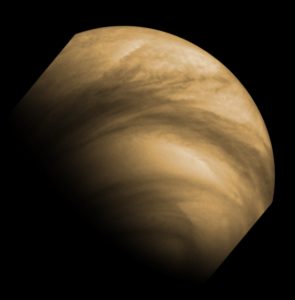
Come onde del mare su un litorale: è questa la maniera più breve per spiegare l’effetto delle onde di gravità atmosferiche in azione su Venere. Un nuovo studio basato sui dati di Venus Express ha collegato, per la prima volta, le “onde” sulle nubi venusiane con la topografia della superficie sottostante. Continua a leggere
Confermati più di 100 esopianeti grazie alla missione K2
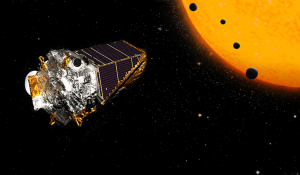
Un team internazionale di astronomi ha scoperto un tesoro di nuovi mondi grazie alla rinnovata missione K2 del telescopio Kepler della NASA. Tra i 197 pianeti candidati iniziali, gli scienziati hanno confermato 104 pianeti al di fuori del nostro Sistema Solare. Continua a leggere
I pianeti giganti contengono idrogeno oscuro?
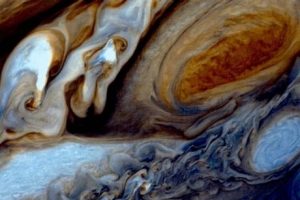
Alcune ricerche condotte in laboratorio hanno rivelato che negli strati profondi di pianeti come Giove e Saturno, dove si raggiungono elevatissimi livelli di temperatura e di pressione, si troverebbe inaspettatamente uno strato di idrogeno semimetallico opaco alla luce. La scoperta contribuisce a spiegare come possono raffreddarsi ed evolvere i pianeti giganti. Continua a leggere
Una stella brillante in un ambiente dai colori vivaci
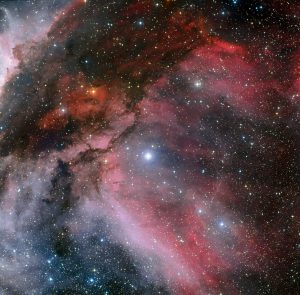
Una spettacolare immagine ripresa dalla Wide Field Imager dell’ESO a La Silla, in Cile mostra la stella brillante e insolita WR 22, ed i suoi colorati dintorni. WR 22 è una stella molto calda e brillante, che sta spargendo strati della sua atmosfera nello spazio, ad una velocità molti milioni di volte più elevata rispetto al Sole. Si trova nella parte esterna della Nebulosa della Carena, da cui si è formata. Continua a leggere
Nursery stellare in NGC 1672

Questa immagine mozzafiato della galassia a spirale barrata NGC 1672 consente di ammirare la grande barra della galassia, le vaste regioni di formazione stellare e le fasce oscure di polvere interstellare. Continua a leggere
Una nebulosa ricca di azoto

Questa immagine di Hubble mostra una nebulosa planetaria chiamata NGC 6153, situata a circa 4000 anni luce di distanza nella costellazione dello Scorpione. La debole foschia blu presente in tutta l’inquadratura mostra ciò che resta di una stella simile al Sole dopo che ha esaurito la maggior parte del suo combustibile. Continua a leggere
Una galassia starburst molto speciale

Questa immagine è stata ripresa dall’Advanced Camera for Surveys (ACS) a bordo del telescopio Hubble e mostra una galassia starburst dal nome MCG + 07-33-027.
La galassia si trova a circa 300 milioni di anni luce di distanza dalla Terra e presenta un tasso straordinariamente elevato di formazione stellare. Continua a leggere
Una ‘carezza’ al Sole
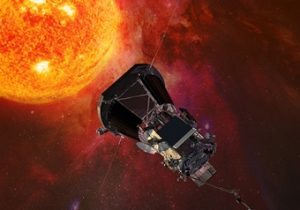
Proseguono i test per la navicella Solar Probe Plus della NASA, che nell’estate del 2018 verrà lanciata verso la nostra stella per raccogliere dati sull’attività solare. La sonda batterà tutti i record di vicinanza al Sole.
Avvicinarsi al Sole fin quasi a sfiorarlo: ecco la nuova sfida della NASA, che con la sua missione Solar Probe Plus tenterà un’impresa immaginata circa tre millenni fa già dalla mitologia greca. Continua a leggere