La Stella di Betlemme tra Scienza, Storia e Fede
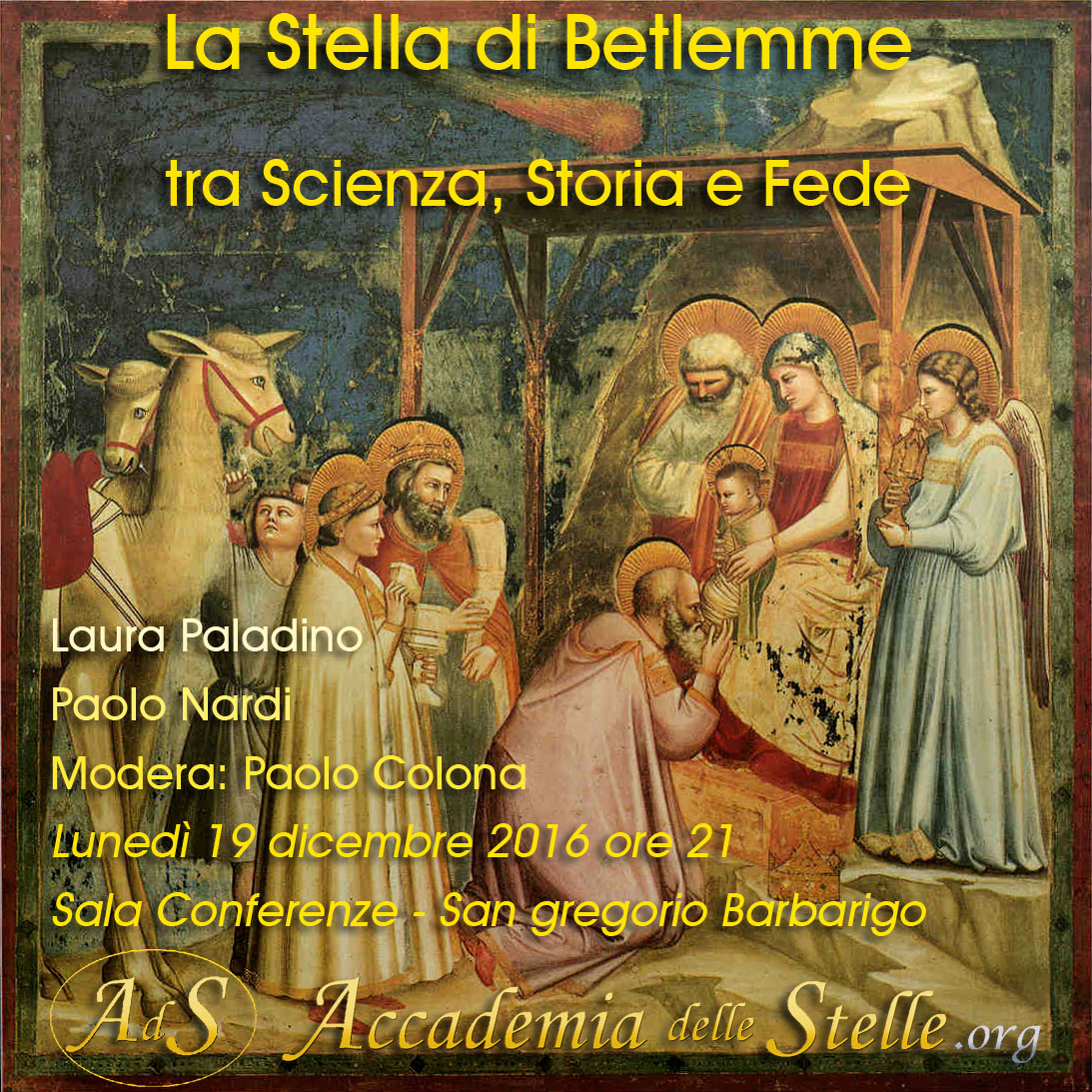 La Stella di Betlemme è l’astro che apparve in cielo prima della nascita di Gesù. La raffiguriamo nei Presepi come una cometa, seguendo l’interpretazione che Giotto ne diede nella sua celebre Natività di Padova.
 Un buco nero in rapida rotazione divora una stella
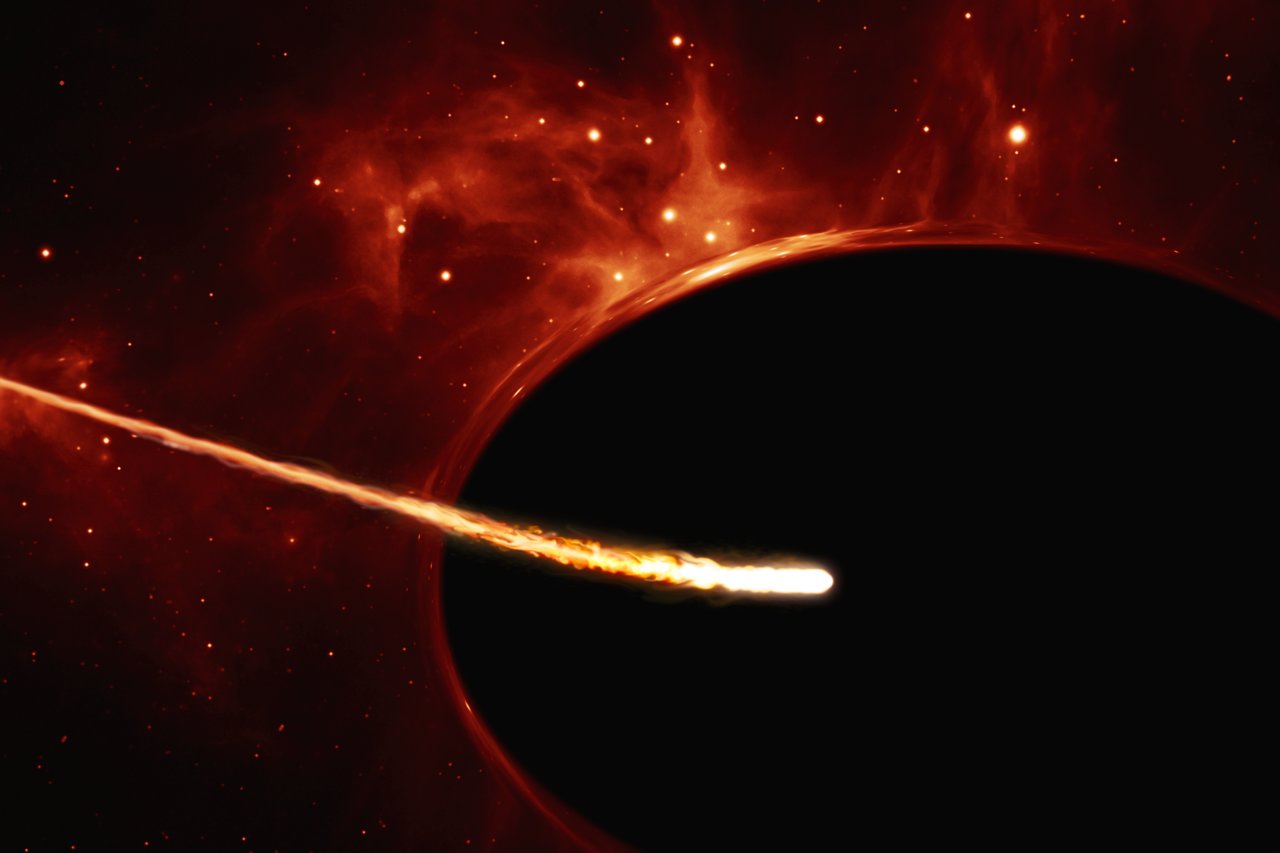
Si riteneva che il lampo luminoso straordinariamente brillante visibile in una galassia remota, chiamato ASASSN-15lh, fosse la più brillante supernova mai osservata. Ma nuove rilevazioni effettuate da vari osservatori, tra cui ESO, hanno messo in dubbio questa classificazione. Un gruppo di astronomi ha ipotizzato che la sorgente sia un evento ancora più estremo e molto raro: un buco nero in rapida rotazione che sta facendo a pezzi una stella imprudente che si è avvicinata troppo. Continua a leggere
Metamorfosi nella Vergine
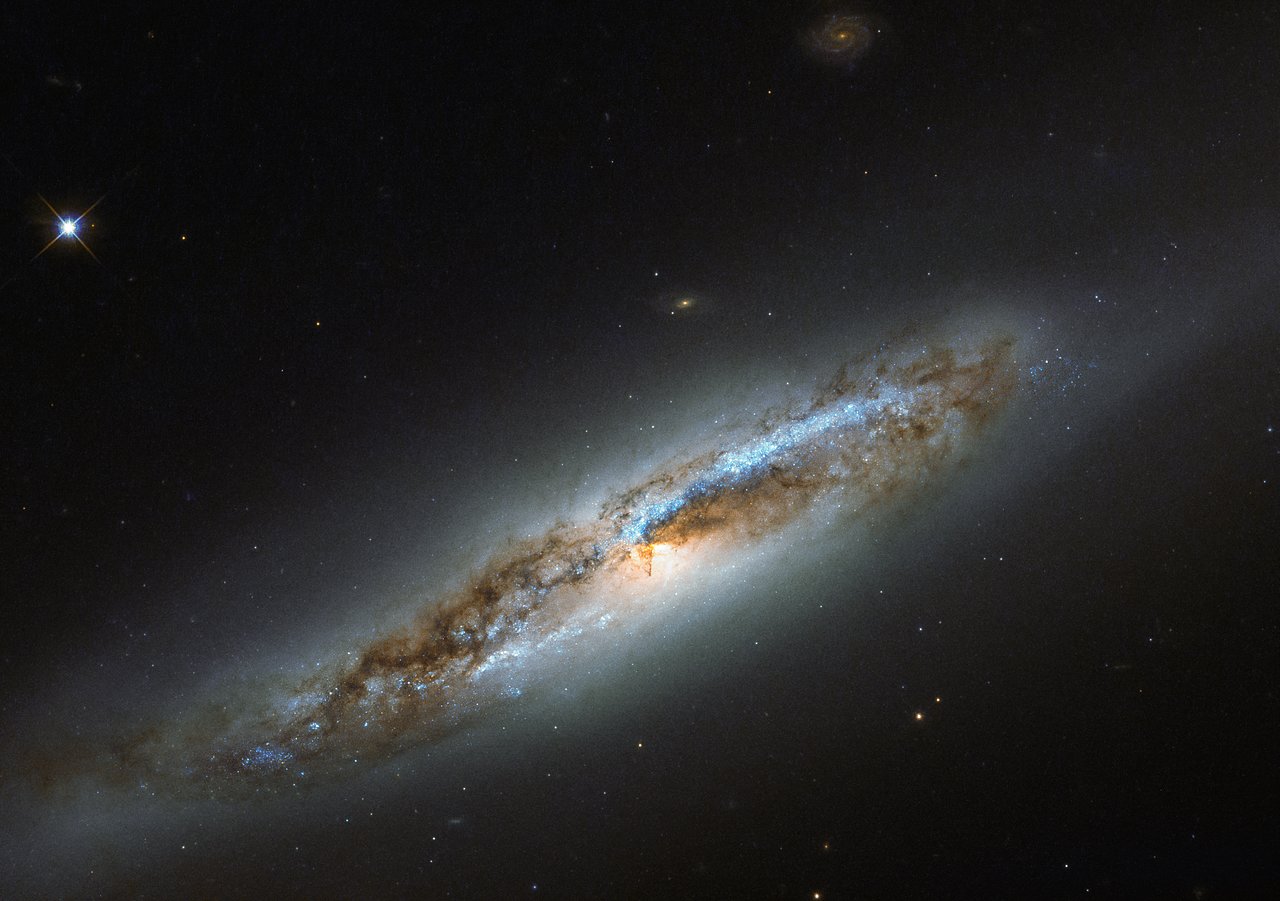
Questa volta l’obiettivo del telescopio Hubble è una galassia molto particolare, NGC 4388, soggetta suo malgrado ad una trasformazione radicale che ne ha alterato l’intera struttura, quasi si trattasse di una vera e propria metamorfosi. Continua a leggere
Un Acquerello Cosmico
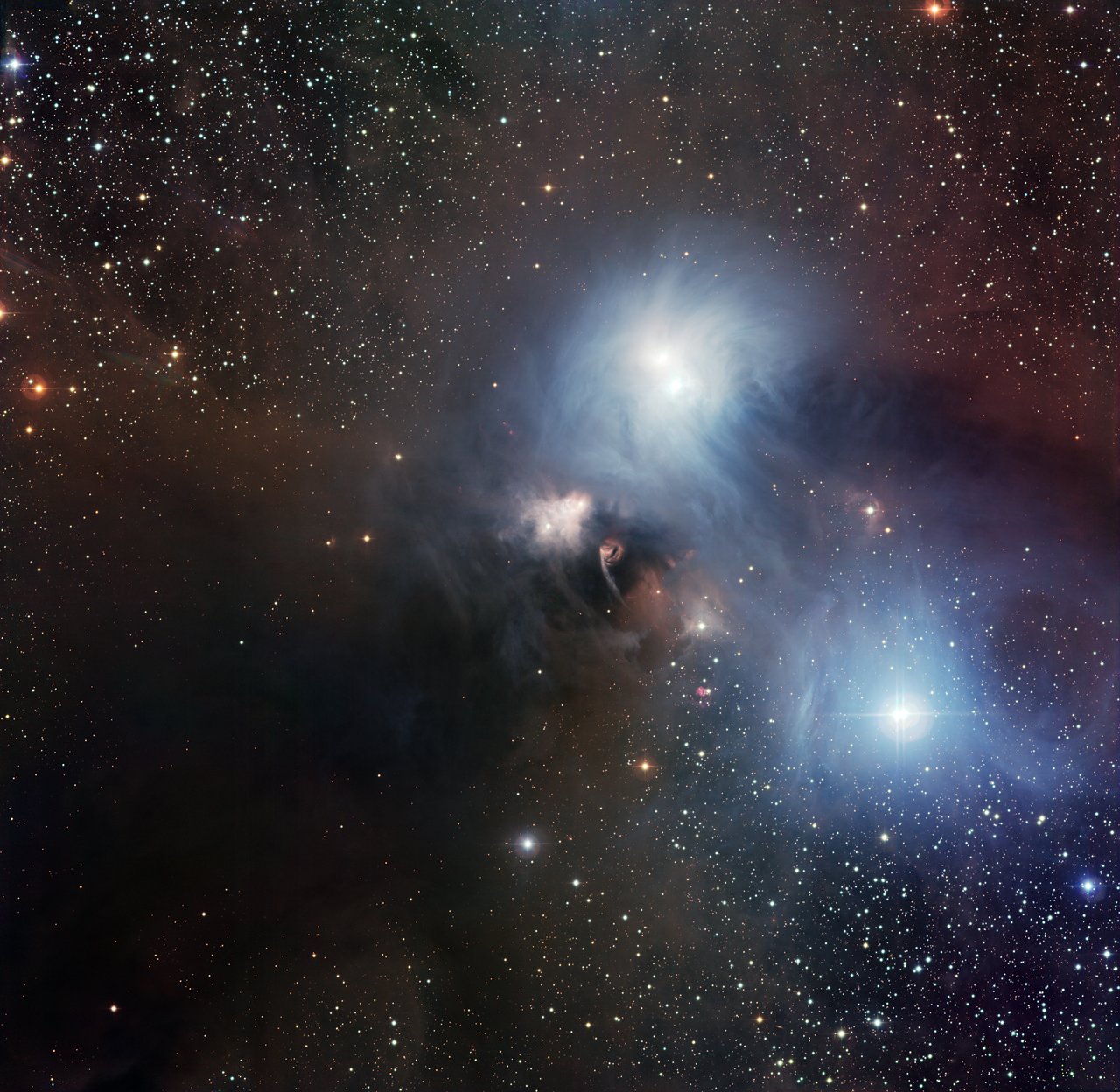
Questa magnifica visione della regione attorno alla stella R Coronae Australis è stata realizzata con immagini riprese con il Wide Field Imager (WFI) all’Osservatorio dell’ESO. R Coronae Australis si trova nel cuore di una vicina regione di formazione stellare ed è circondata da una nebulosa a riflessione di una delicata tonalità bluastra avvolta in una vasta nube di polveri. Continua a leggere
La Straordinaria Spirale in LL Pegasi
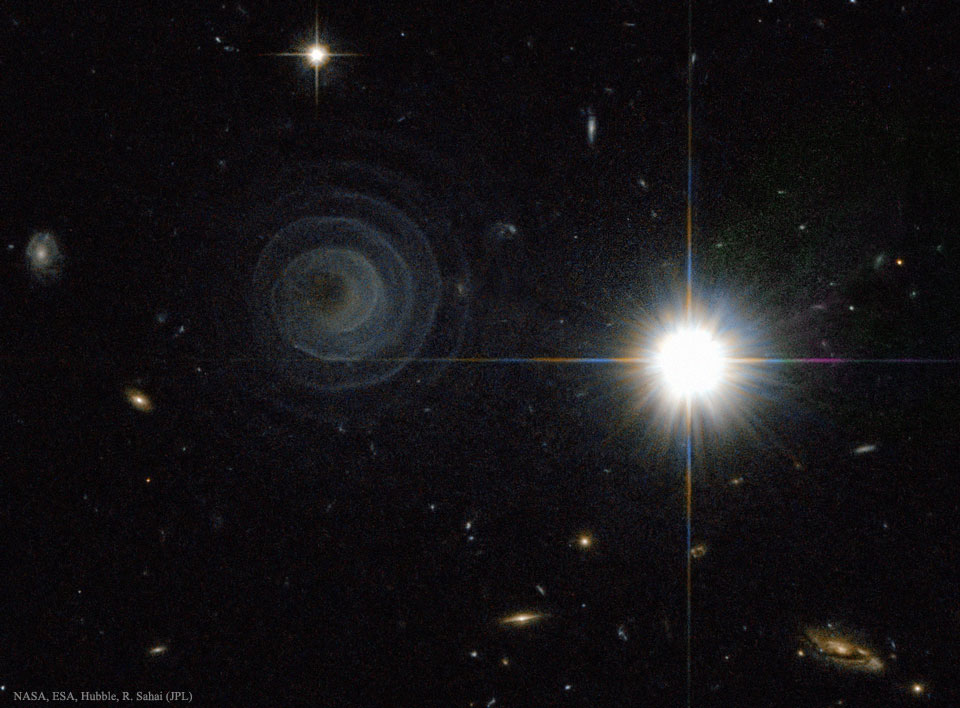
Cosa ha generato la straordinaria formazione a spirale visibile nell’immagine a sinistra? Nessuno può affermarlo con certezza, sebbene probabilmente questa strepitosa struttura sia in relazione ad una stella parte di un sistema binario, che sta iniziando la fase di nebulosa planetaria, con conseguente espulsione degli strati esterni della sua atmosfera. Continua a leggere
Tripudio di stelle in una lontana galassia
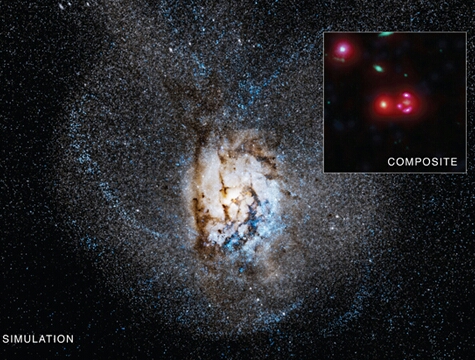
Una galassia distante, scoperta recentemente, si illumina del bagliore di una quantità straordinaria di stelle neonate, formandole ad un ritmo forsennato. La prolifica galassia, chiamata SPT 0346-52, si trova a 12,7 miliardi di anni luce dalla Terra ed è stata quindi osservata circa un miliardo di anni dopo il Big Bang. Continua a leggere
L’Oggetto di Hoag
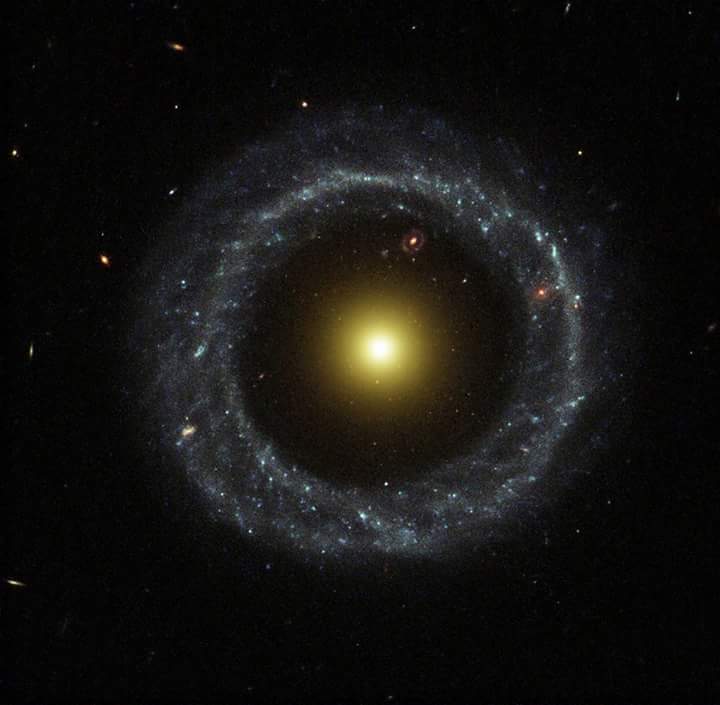
Un anello quasi perfetto di calde stelle blu disposte attorno al nucleo giallastro di una galassia insolita: è l’Oggetto di Hoag. L’intera galassia si estende in ampiezza per circa 120.000 anni luce, leggermente più grande della nostra Via Lattea. L’anello blu è dominato dalla presenza di gruppi di giovani stelle massicce, in netto contrasto con il nucleo di colore giallo composto da stelle per lo più vecchie. Continua a leggere
Fuochi d’artificio stellari
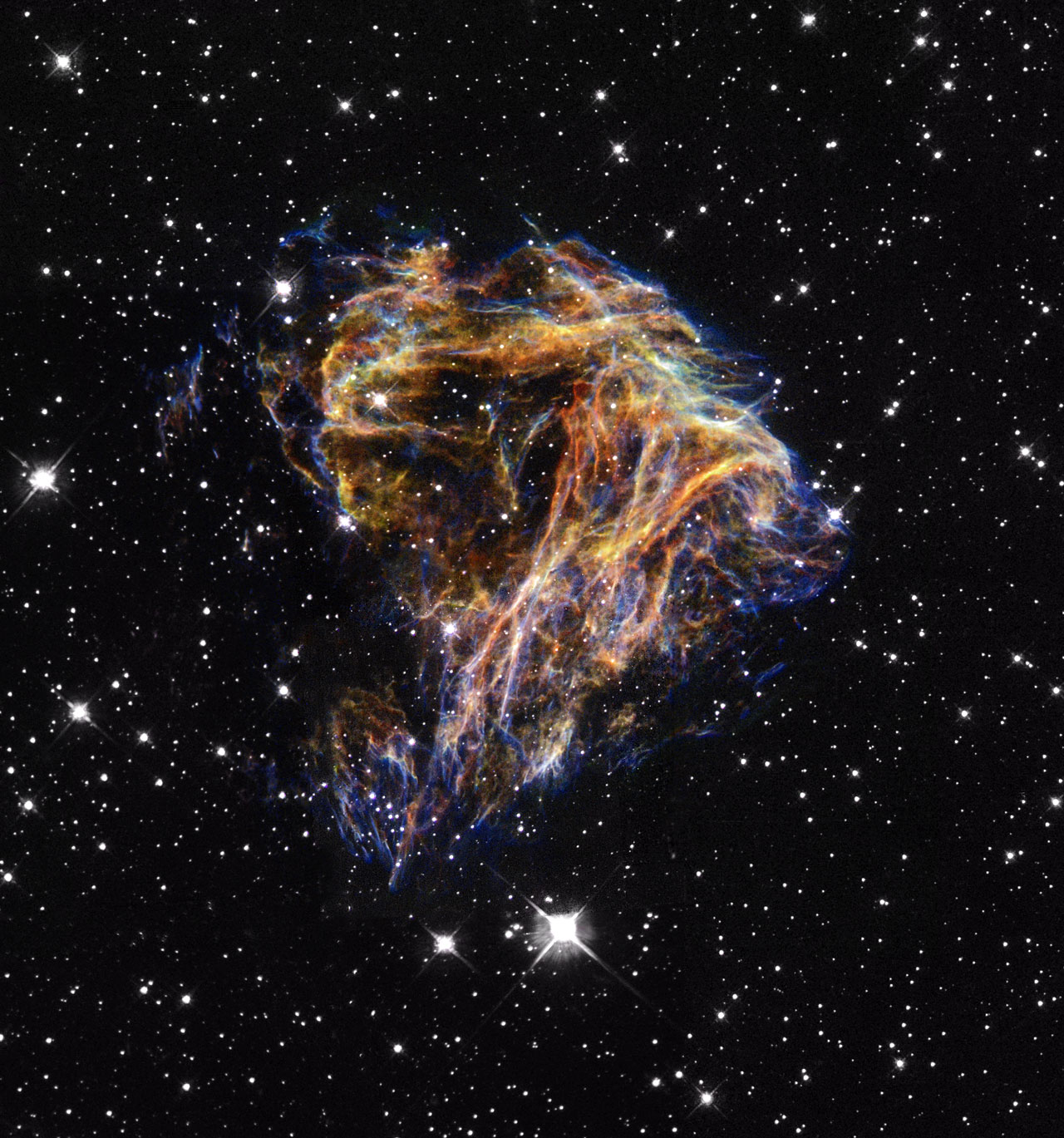
Nessuno spettacolo pirotecnico estivo potrebbe eguagliare la delicata trama di questi filamenti e la pittorica bellezza di queste scintille colorate. Eppure N49 rappresenta l’ultimo atto, distruttivo e spettacolare, del ciclo evolutivo di una stella. Continua a leggere
IC 4628: La Nebulosa Gambero
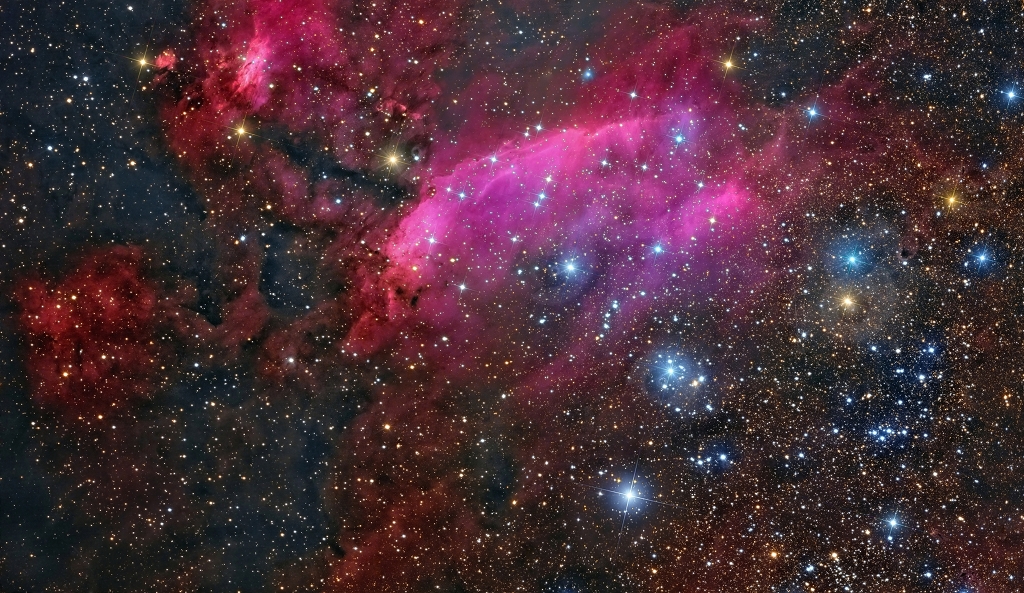
A sud di Antares, nella coda della costellazione ricca di nebulose dello Scorpione, è possibile ammirare la nebulosa a emissione IC 4628. Continua a leggere
Ammassi di Galassie in Collisione
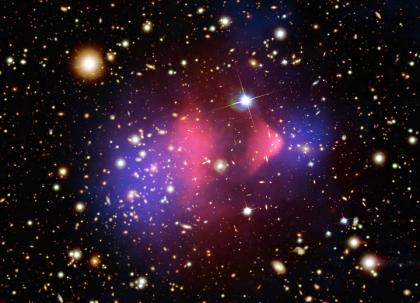
Molte galassie fanno parte di ammassi galattici, strutture cosmiche fra le più grandi nell’Universo, tenute insieme dalla gravità. La nostra Via Lattea, ad esempio, fa parte del Gruppo Locale, un insieme di una cinquantina di galassie fra le quali la più grande è la galassia di Andromeda. Il vasto ammasso di galassie più vicino a noi, ad una distanza di circa 50 milioni di anni luce, è l’Ammasso della Vergine, che ospita intorno ai 2000 oggetti. Continua a leggere